All About Aluminum Castings: Recognizing Their Role and Relevance in Manufacturing
Aluminum castings are indispensable to modern manufacturing, providing a mix of light-weight buildings and toughness. They promote complex designs while reducing assembly prices. Industries such as aerospace and auto frequently make use of these parts for boosted performance. However, the production of light weight aluminum spreadings is not without its challenges. Recognizing the subtleties of this procedure discloses both the benefits and possible risks. Discovering these elements will certainly provide deeper understandings right into their growing significance.
Review of Light Weight Aluminum Spreading Processes
Aluminum casting processes play a necessary function in manufacturing, providing adaptability and efficiency. These processes entail putting molten aluminum right into molds to create specific shapes and components. Various strategies are utilized, including sand spreading, die casting, and financial investment casting, each distinguished by its approach of mold production and the desired application.
Sand casting makes use of a blend of sand and binder to develop mold and mildews, permitting complicated geometries. Die spreading, on the various other hand, includes requiring liquified light weight aluminum into steel molds, causing high precision and smooth coatings. Investment spreading, commonly utilized for detailed designs, includes creating a wax pattern covered with a ceramic covering, which is then full of liquified aluminum.
These casting techniques satisfy varied commercial needs, making aluminum a favored product for components in fields such as automobile, aerospace, and customer items. The option of casting strategy greatly affects the last item's quality and performance.
Advantages of Making Use Of Aluminum Castings
The advantages of making use of light weight aluminum spreadings in production are substantial and numerous. To begin with, light weight aluminum's lightweight nature adds to lowered total product weight, enhancing energy efficiency in applications such as aerospace and auto industries. Additionally, aluminum castings exhibit exceptional rust resistance, making sure long life and toughness in rough atmospheres. The product's thermal and electric conductivity likewise makes it appropriate for various applications, including electronics and warmth exchangers.
Additionally, aluminum spreadings can be generated with intricate layouts, permitting extra intricate forms that satisfy particular functional demands. This convenience adds to decreased assembly prices and enhanced design flexibility. Additionally, the casting procedure itself is reliable, enabling high-volume manufacturing with constant quality. Light weight aluminum is recyclable, making it an environmentally friendly choice in manufacturing. Jointly, these advantages highlight why light weight aluminum castings are increasingly favored throughout diverse fields, using both efficiency benefits and financial performance.
Typical Applications of Light Weight Aluminum Castings
While different products are used in production, light weight aluminum castings attract attention because of their wide variety of applications throughout numerous markets. These spreadings are widely utilized in the automotive market for engine elements, transmission real estates, and structural parts, adding to lighter cars and enhanced gas performance. In the aerospace industry, aluminum castings are vital for airplane elements, where weight reduction is important for efficiency and security.
Additionally, the electrical sector uses aluminum spreadings for housings and structural components in machinery, gaining from the product's superb conductivity. In consumer goods, light weight aluminum spreadings can be discovered in things such as home appliances and sporting tools, giving longevity and a modern visual. The building sector uses aluminum spreadings in building components, home window frames, and fixtures, showcasing their versatility and strength. On the whole, light weight aluminum castings play an important role in enhancing item efficiency and effectiveness throughout numerous markets.
Secret Manufacturing Techniques for Light Weight Aluminum Castings
The manufacturing of aluminum castings relies upon different techniques, with sand spreading and pass away casting being among one of the most popular. Sand spreading includes producing molds from sand, permitting complex designs and huge components. In contrast, pass away casting utilizes high-pressure injection of molten aluminum right into reusable mold and mildews, offering precision and performance for mass production.
Sand Spreading Process
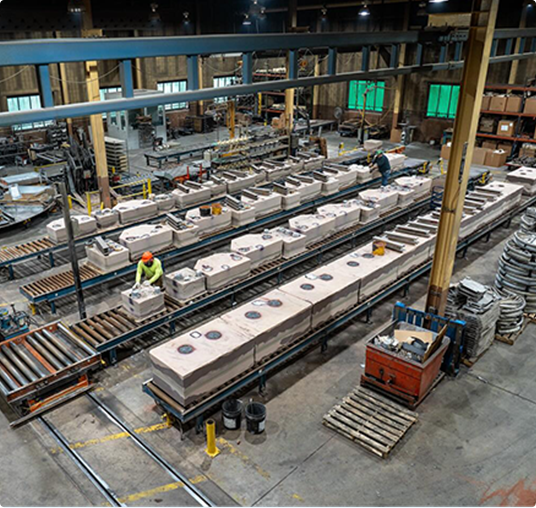
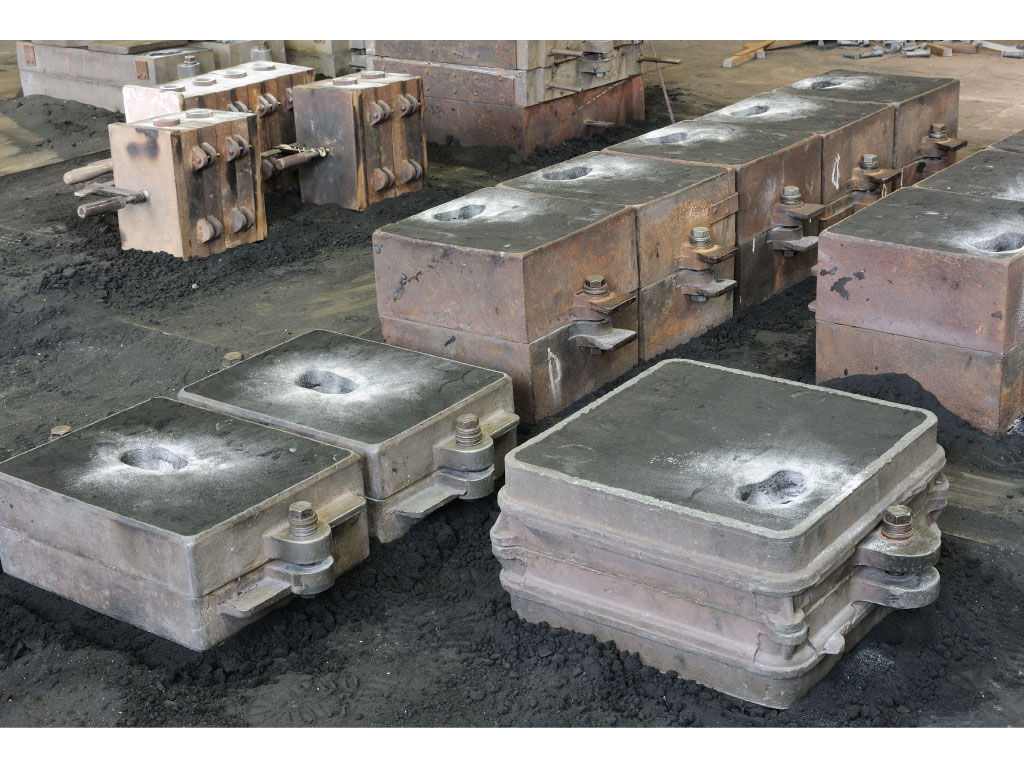
Sand spreading stands as one of the most commonly made use of methods for creating aluminum castings, thanks to its convenience and cost-effectiveness. This procedure involves creating a mold from a mixture of sand and a bonding representative, typically clay. When the mold and mildew is prepared, molten light weight aluminum is put right into it, enabling the steel to fill up the cavity. After cooling down, the mold and mildew is damaged away to reveal the casting. Sand casting accommodates huge components and intricate geometries, making it suitable for various applications. Furthermore, it enables easy modifications, making it possible for makers to readjust layouts swiftly. The surface finish may call for extra machining for specific applications, making sure the final product satisfies top quality criteria.
Pass Away Spreading Techniques
Pass away casting represents an extremely effective method for producing aluminum spreadings, identified by its capability to provide high precision and exceptional surface finish. This strategy largely includes requiring molten light weight aluminum into a mold under high stress, making sure that complex shapes and great information are caught precisely. There are two major die spreading methods: warm chamber and cool chamber. Warm chamber die casting is ideal for alloys with low melting factors and enables for faster cycles, while cold chamber pass away spreading is excellent for high-temperature alloys, calling for separate melting systems. Both approaches enhance manufacturing rates and reduce product waste, making die casting a favored option in markets such as automobile and electronics, where sturdiness and dimensional precision are extremely important.
Sustainability in Light Weight Aluminum Spreading Manufacturing
While the demand for aluminum spreadings continues to grow, suppliers are significantly focusing on sustainability in their manufacturing procedures. This change is driven by the need to decrease ecological effect and save natural resources. Numerous firms are embracing reusing initiatives, making use of scrap light weight aluminum, which notably reduces power intake and greenhouse gas exhausts contrasted to primary light weight aluminum production. Additionally, innovations in casting technologies are making it possible for a lot more efficient usage of materials, decreasing waste during the manufacturing process.
Suppliers are likewise checking out eco-friendly choices to traditional casting approaches, such as 3D printing and progressed mold modern technologies, which aid optimize resource use. Wisconsin Aluminum Foundry. In addition, implementing sustainable practices in supply chain administration assurances that raw products are sourced responsibly. Therefore, the light weight aluminum casting sector is making strides towards a much more lasting future, straightening with global environmental objectives while satisfying the boosting demand for high-performance aluminum items
Challenges and Considerations in Light Weight Aluminum Spreading
Aluminum casting presents different difficulties that suppliers must navigate to ensure item integrity. Style intricacy can complicate the spreading process, resulting in possible defects and raised production time. In addition, keeping strenuous quality assurance requirements is important to fulfill the demands of accuracy and dependability in finished parts.
Layout Complexity Issues
Creating components for aluminum casting presents different intricacies that engineers must browse to achieve suitable outcomes. One significant challenge is the requirement for precise geometry; complex designs can result in troubles in mold and mildew development and increased risk of defects. Furthermore, thermal residential properties of aluminum necessitate cautious factor to consider of cooling rates, as unequal cooling can create warping. Wall surface thickness variations also present an obstacle, as they can affect flow characteristics and structural stability. Engineers have to stabilize layout aesthetic appeals with manufacturability, ensuring that features such as fillets and ribs are optimized for stamina without complicating the casting process. Lastly, factors to consider relating to draft angles are vital to facilitate mold release, further making complex the style procedure. These elements collectively underscore the complexities associated with aluminum spreading layout.
High Quality Control Challenges
Accomplishing top quality light weight aluminum castings involves navigating a series of quality assurance obstacles that can significantly affect the end product. First, variations in raw material composition can lead to incongruities in casting residential properties, making it necessary to ensure worldly top quality. Second, the casting process itself is susceptible to issues, such as porosity and shrinkage, which can endanger structural stability. Furthermore, temperature control throughout melting and putting is important; fluctuations can cause uneven solidification, influencing dimensional precision. Extensive examination approaches, including non-destructive testing, need to be employed to identify problems early. Maintaining stringent process documentation and adherence to industry standards is important for traceability and high quality guarantee, highlighting the intricate equilibrium needed to produce reputable aluminum castings in manufacturing.
Future Trends in Aluminum Spreading Technology
As suppliers seek to enhance effectiveness and sustainability, developments in aluminum spreading innovation are arising to fulfill these needs. One considerable trend is the combination of automation and expert system, which enhance manufacturing processes and boost accuracy in casting operations. These innovations reduce human error and optimize source usage, ultimately leading to set you back reductions.
In addition, the fostering of advanced products and alloys is reshaping the landscape. New solutions enhance performance attributes, such as corrosion resistance and light-weight homes, making light weight aluminum castings more flexible throughout various industries.
Additionally, sustainable methods are obtaining traction, with an emphasis on recycling and reducing waste. Techniques such as 3D printing are additionally being explored to produce intricate geometries that were previously unattainable
Frequently Asked Inquiries
Just How Do Aluminum Castings Compare to Other Products?
Aluminum spreadings supply benefits such as light-weight, corrosion resistance, and outstanding thermal conductivity contrasted to other products. They are frequently liked for applications needing durability and efficiency, especially in aerospace and automotive industries.
What Is the Lifespan of Light Weight Aluminum Castings?
The lifespan of light weight aluminum castings typically ranges from 10 to half a century, relying on ecological problems, usage, and maintenance. Their rust resistance and sturdiness contribute noticeably to their durable efficiency in various applications.
Can Aluminum Castings Be Recycled?
Yes, light weight aluminum castings can be reused. The recycling procedure is efficient, enabling for the recovery of light weight aluminum without significant loss of top quality, making it a sustainable option in production and decreasing ecological impact.
What Precaution Are Needed During Light Weight Aluminum Spreading?
Throughout aluminum casting, important precaution consist of putting on ideal personal protective devices, ensuring correct air flow, keeping equipment, using fireproof products, and applying safe dealing with procedures for liquified steel to avoid injuries and crashes.
Exactly How Do Temperature Modifications Affect Light Weight Aluminum Castings?
Temperature changes considerably impact aluminum castings by influencing fluidity, solidification rates, and mechanical properties. Rapid cooling can lead to increased brittleness, while progressive cooling promotes far better architectural honesty and lowers the danger of issues.
Pass away spreading, on the other hand, includes forcing molten light weight aluminum right into steel mold and mildews, resulting in high accuracy and smooth surfaces. The manufacturing of aluminum castings depends on different techniques, with sand spreading and pass away casting being amongst the most popular. Sand spreading stands as one of the most extensively used approaches for creating aluminum castings, thanks to its versatility and cost-effectiveness. Pass away casting represents a very reliable method for producing light weight aluminum castings, defined by its capacity to deliver high Aluminum Castings accuracy and excellent surface coating. While the demand for light weight aluminum castings proceeds to grow, makers are progressively focusing on sustainability in their production procedures.
Comments on “Wisconsin Aluminum Foundry and Aluminum Castings: leaders in production excellence”